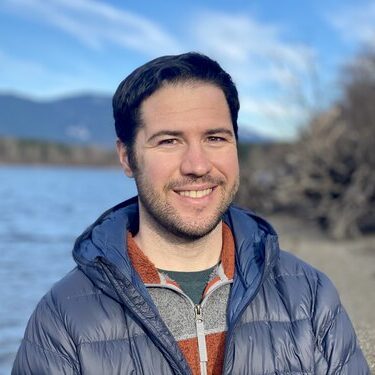
Originally from Kansas City, MO, I earned my undergraduate degree in Meteorology from Texas A&M University. My fascination with coupled ocean-atmosphere interactions and their influence on climate variability led me to pursue a PhD in Oceanography at the Scripps Institution of Oceanography. After graduate school, I served as a postdoctoral fellow at the Cooperative Institute for Research in Environmental Sciences (CIRES) before becoming a federal Research Scientist at the NOAA Physical Sciences Laboratory in Boulder, CO.
Currently, I am an Assistant Professor in the Department of Marine, Earth, and Atmospheric Sciences (MEAS) at NC State University, where I teach Principles of Physical Oceanography (MEA 460/540). In the Amaya Lab, our ongoing research focuses on understanding the physical drivers of marine extremes (e.g., marine heatwaves) in the Northeast Pacific and utilizing machine learning to develop predictive tools that aid in marine resource management.
The Amaya Lab is currently seeking motivated Ph.D. students! Please reach out via email if you are interested in joining our team!
M.SOceanographyScripps Institution of Oceanography2015
PhDOceanographyScripps Institution of Oceanography2019
Area(s) of Expertise
Coupled Ocean-Atmosphere Dynamics: Understanding the influence of large-scale interactions on climate variability, change, and extremes on timescales of weeks to decades.
Marine Extremes: Exploring the physical drivers of marine heatwaves and their impacts on other components of the climate system.
Applications-Driven Climate Science: Developing real-world predictive tools and products to aid decision-making in marine resource and water management.
Machine Learning in Oceanography: Utilizing ML techniques to build and improve real-time ocean prediction systems.
Fisheries & Climate: Connecting climate variability and change to impacts on marine and inland fisheries.